The Rudolfine Tunnel, a technical marvel from a strange time
A 400-year-old engineering feat runs beneath Prague’s Letná district.
Emperor Rudolf II is mostly remembered for his pursuit of esoteric arts like alchemy and astrology, or his vast collections of curiosities including rare manuscripts, mechanical toys and exotic animals. His court was filled with alchemists like Edward Kelley and Sendivogius as well as astrologers like Tycho Brahe and Johannes Kepler. But one of his more practical projects is still in use: the Rudolfine Tunnel carries water from the Vltava River under a neighborhood and into Prague’s Stomovka Park. But you have to know where to look for its traces.
Rudolf began his reign in 1576 and moved the capital of the Holy Roman Empire from Vienna to Prague in 1583. He reigned there until his death in 1612. His power waned in his last few years due to infighting with his younger brother. However the almost three decades preceding that were a golden time for Prague, filled with many building projects including an expansion of Prague Castle, which had fallen into disrepair.
The park now known as Stromovka originally was a private imperial game preserve that Rudolf expanded and filled with exotic trees and animals. Stromovka Park was first established in 1268 by Přemysl Otakar II, who was known as the Iron and Gold King. In 1547, the first artificial lake was added.
To create more artificial fish ponds, Rudolf had a kilometer-long tunnel built from the Vltava River, under Letná and into the middle of the woods. While Stromovka actually borders the river on its north side, for technical reasons it was better to bring in water from the further south side. Work on the Rudolfine Tunnel (Rudolfova štola) began in 1584 and it began operating in 1593.
Tracing the route of the tunnel
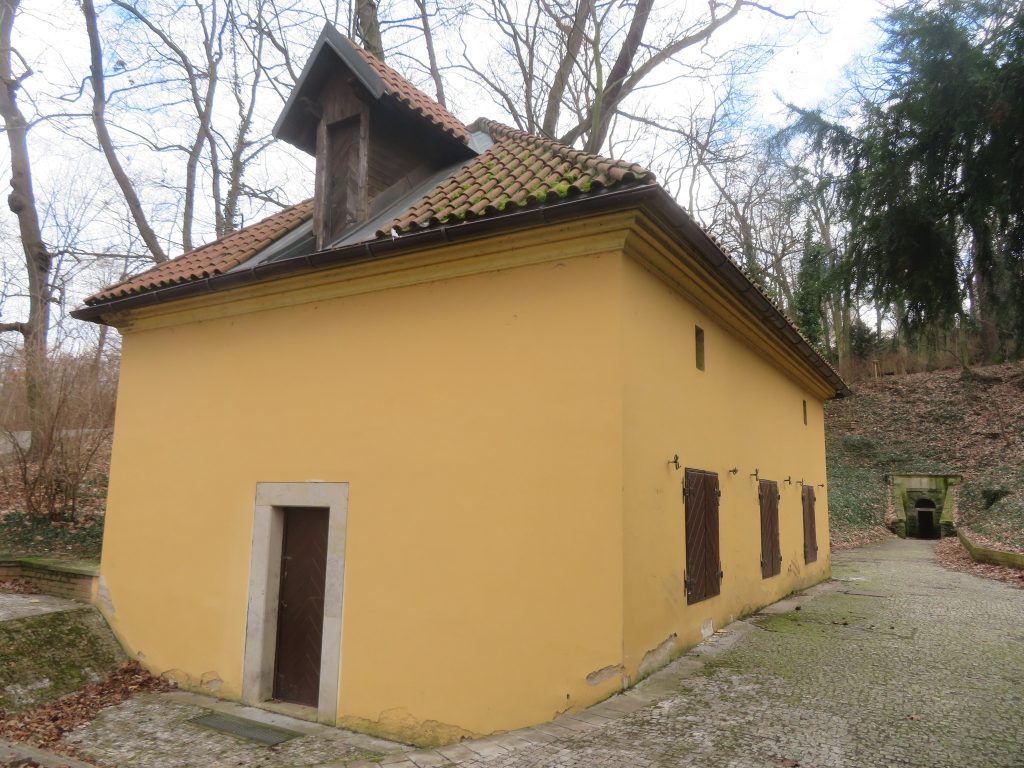
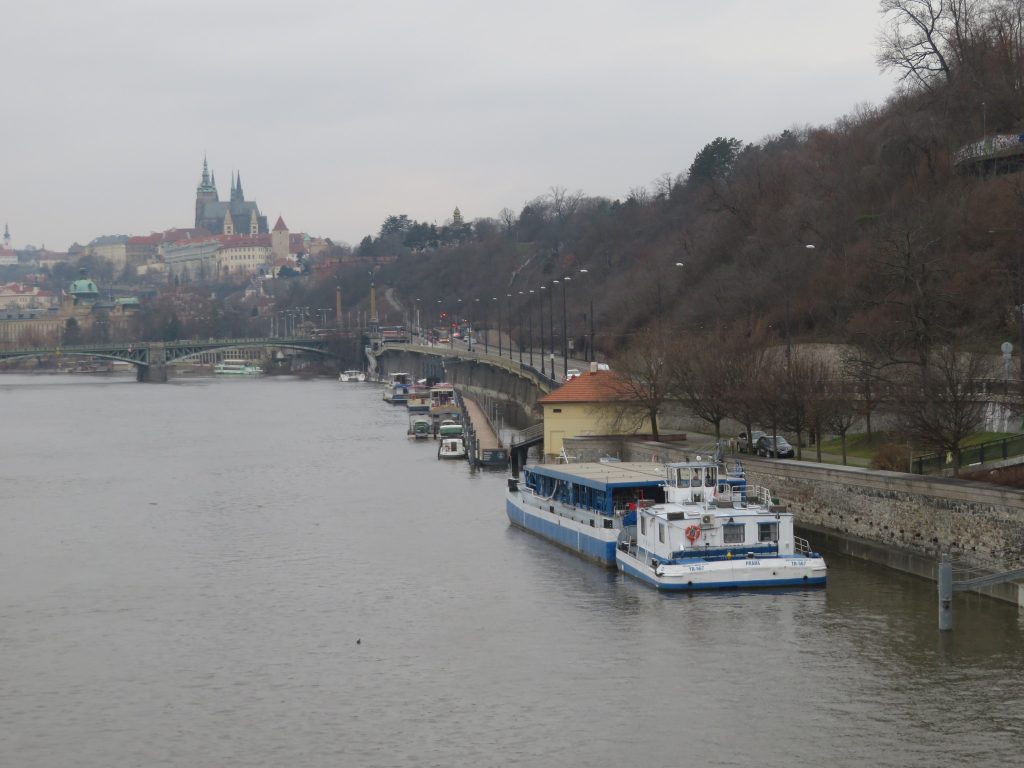
The Rudolfine Tunnel (Rudolfova štola in Czech) starts at a small shack not far from the bridge Štefánikův most. The “havirna” controlled the iron sluice gates below the waterline. The shack is covered in graffiti and the area around it is used for parking.
Letná Park is on the hill above the shack. The tunnel runs under the Letná beer garden and the tennis courts. A concrete cap hidden in the grass near the beer garden tops a shaft leading down to the tunnel.
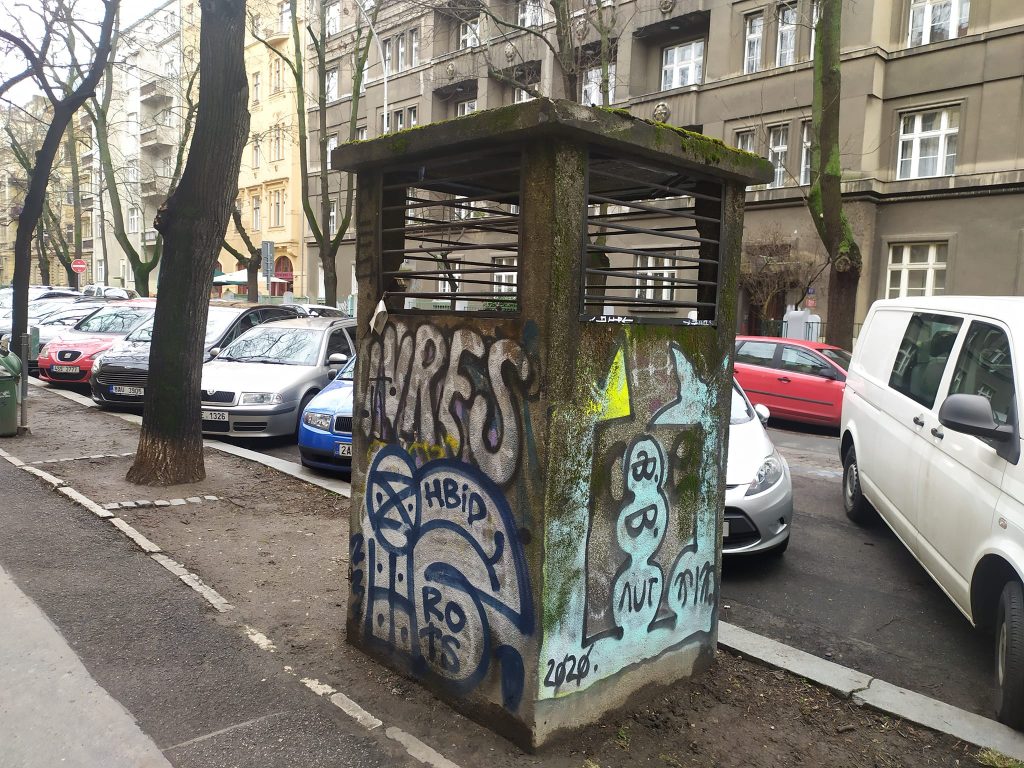
Just beyond Letná Park there is an elementary school called Gymnázium Nad Štolou on the street called Nad Štolou, which means “above the tunnel”. The Rudolfine Tunnel runs some 45 meters directly below the street. Nad Štolou joins with Čechova Street, which has a ventilation shaft covered by a dilapidated concrete and iron turret from 1906. This street leads to a playground at the edge of Stromovka.
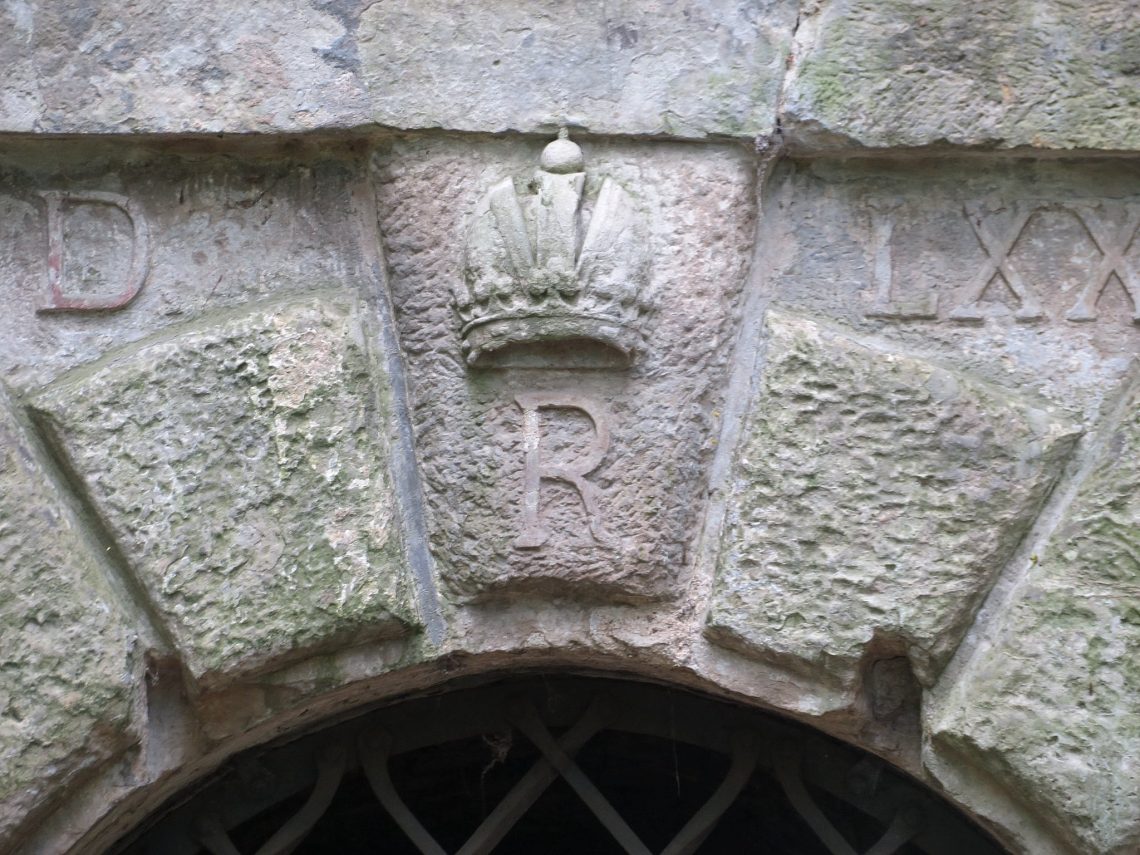
If you cut straight through the park, you eventually get to a stone portal with an arch embedded on the side of the hill. The keystone has Rudolf II’s seal: the letter “R” and an imperial crown. The arch is the historical entry to the water tunnel which would have been used for maintenance. The recently renovated Šlechtovka restaurant is nearby and serves as a landmark to help find the rather obscure tunnel portal.
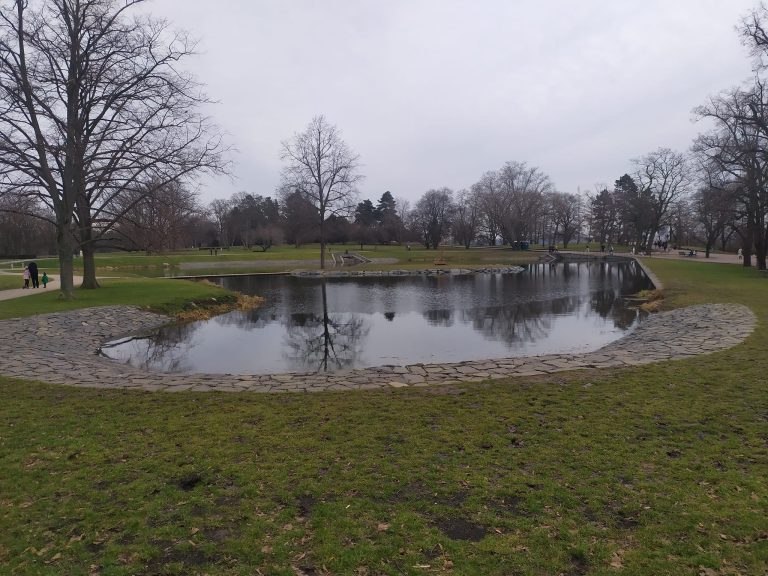
The ponds that the Rudolfine Tunnel was meant to fill are right in front of the portal and Šlechtovka. A large urban renewal project has seen the ponds being dredged and renovated, with new paths and benches added.
Creating the tunnel wasn’t easy as much of the route was through rock. Construction took place between 1584 and 1593, long before the invention of dynamite, stopping sporadically when money ran out. The excavation involved heating the rock with hot iron rods, and then dousing the rock with cold water to make it shatter.
Many of the tunnel workers had experience from the silver mines in Kutná Hora. The first step was to build five vertical shafts, which could be used to haul out the stone and soil to make the horizontal tunnel. The Čechova Street vent is one of these.
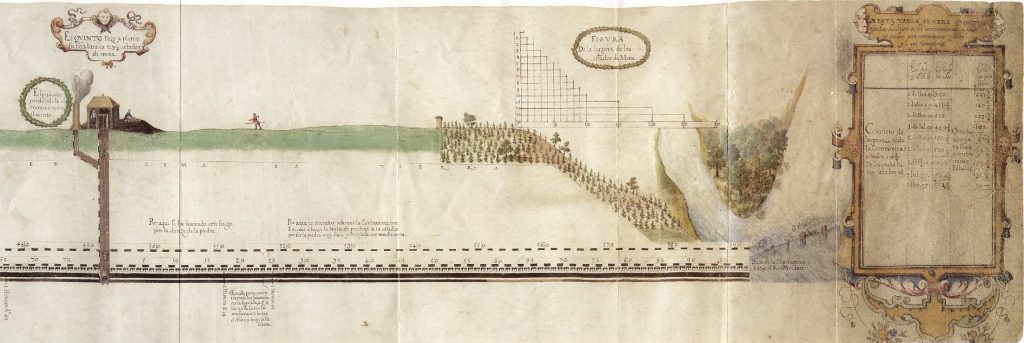
There is a long narrow hand-coloured scroll with original plans for the Rudolfine Tunnel at the National Technical Museum, located almost exactly above the tunnel. The 2.5-meter-long scroll was made by mining engineer Lazarus Ercker von Schreckenfels. The text is in Spanish, as that was a language both Rudolf II and von Schreckenfels shared.
The scroll, which vanished when Prague was looted at the end of the Thirty Years’ War, turned up at an auction in Paris in the early 1900s. The anonymous buyer gave it to what is now the National Technical Museum in 1911.
The Rudolfine Tunnel continues to function
The oval-shaped Rudolfine Tunnel runs 1,098 meters long, ranging from 0.8 meters to 1.5 meters wide and 2 to 4 meters in height. The total construction cost was 66,299 groschen, a type of silver coin.
Miners dug from both ends and met in the middle to save construction time. The meeting point is a bit wider than planned as the tunnels were off a bit. The miners had to make some slight deviations along the way to avoid the most difficult terrain.
The tunnel is still maintained by the city, and cleaned out from accumulated muck once a year. The entry by Stromovka was restored and opened to the public in 1997. The restoration was funded by United Distillers as part of a project called Water of Life. It was open sporadically after that until the floods in 2002 forced its closure. It has been off limits ever since. When it was open, visitors received a printed copy of the engineering scroll.
Water from the Rudolfine Tunnel is now also used to feed a new pond that was created in Letná between 2020 and 2023, based on unrealized landscaping plans from the 19th century. The new irrigation pond is intended to help fight drought in the park by supporting the area plant life.
Remains of the Imperial Mill
You can find another stone seal from Emperor Rudolf on the entry to his former grotto at the far western edge of Stromovka. This is one of the few remnants of his Imperial Mill (Císařský mlýn). Rudolf turned the original 14th century water mill into a private imperial retreat where heaven and earth met in the form of a pavilion for alchemical scholars on a small hill reaching to the sky and an artificial grotto indicating the underworld. There was also a small private lake, which gave the place the alternate name of the Imperial Baths.
Unfortunately the mill and surrounding buildings underwent centuries of neglect, willful destruction and careless renovation so that virtually nothing of historical value was left. While the few remaining details are protected landmarks, efforts in the 1990s to rebuild the former mill as it had been in Rudolf’s era failed. The land was instead turned into upscale housing under the name Imperial Mill. Much of the area is for residents only but the grotto gate with the seal can be seen from the parking lot.
The artificial ponds at Stromovka are home to one of Prague’s odder supernatural tales: a zombie leftover from the Uprising of 1848. The undead soldier is easy to outrun, though, the tale says.
Prague has other tales of tunnels. A whole complex is supposed to run under Old Town Square, though none of it is open to the public. The House at the Two Golden Bears allegedly had entry ways to the system, but these portals have long been bricked up. There is a legend about ghosts emanating from the tunnels at night and getting lost in the city.
A few buildings have lower-level pubs or nightclubs and advertise themselves as medieval tunnels, but these usually are just isolated basements that don’t extend very far.
An article by BabaBarock with Raymond Johnston. Copyright BabaBarock Ltd, all rights reserved. Please contact us if you would like to syndicate or otherwise use this article.
You May Also Like
A peasant girl haunts Liechtenstein Palace
October 30, 2017
Mystery in stone: the New Town Hall palindrome
September 11, 2024